 Supplements
Best iron supplements for women in 2026: Garden of Life Vitamin Code Healthy Blood, Floradix Liquid Iron, and Proferrin ES compared. Evidence-based picks for absorption, tolerability, and results.
Quick Answer: Best Picks
Best overall: Garden of Life Vitamin Code Healthy Blood — whole-food iron clinically shown to increase iron levels without nausea or constipation. Includes B12, folate, and vitamin C for complete blood-building support.
Best liquid formula: Floradix Liquid Iron — herbal liquid iron with vitamin C and B vitamins. Easy absorption, gentle on the stomach, and ideal for women who struggle with pills.
Best for severe deficiency: Proferrin ES Heme Iron — pharmaceutical-grade heme iron polypeptide with the highest absorption rate of any oral iron supplement. Gets iron levels up fast with minimal GI side effects.
Why Women Need More Iron
Iron is essential for producing hemoglobin, the protein in red blood cells that carries oxygen throughout your body. Without enough iron, your cells are literally starved for oxygen — leading to the crushing fatigue, brain fog, and weakness that millions of women experience daily.
Women of reproductive age need 18mg of iron per day, more than double the 8mg men require. The reason is straightforward: menstruation. The average woman loses 30-40mL of blood per cycle, translating to roughly 15-25mg of iron lost each month. Women with heavy periods (menorrhagia) can lose 2-3 times that amount.
According to the World Health Organization, iron deficiency is the most common nutritional deficiency worldwide, and women bear the greatest burden. A 2023 study published in The Lancet Haematology found that approximately 30% of menstruating women globally have iron deficiency, and 1 in 5 women of childbearing age in the United States has depleted iron stores (ferritin below 15 ng/mL). A separate 2022 analysis in the American Journal of Clinical Nutrition reported that even among women who appear healthy, subclinical iron deficiency — ferritin between 15-30 ng/mL — affects up to 40% of premenopausal women.
Pregnancy increases iron demands even further. The body needs 27mg daily during pregnancy to support expanded blood volume, placental development, and fetal growth. The CDC recommends universal iron screening for all pregnant women in the first trimester, and low-dose iron supplementation (30mg/day) throughout pregnancy.
Signs of Iron Deficiency
Iron deficiency develops in stages, and symptoms can appear long before you become anemic. Watch for these warning signs:
- Persistent fatigue — the hallmark symptom. Not just feeling tired, but bone-deep exhaustion that sleep doesn't fix.
- Shortness of breath during activities that used to feel easy (climbing stairs, brisk walking).
- Brain fog and difficulty concentrating — a 2021 study in Blood Advances found that iron-deficient women scored significantly lower on cognitive tests, even without anemia.
- Pale skin, gums, or inner eyelids — reduced hemoglobin means less red pigment in tissues.
- Brittle nails or nails that curve upward (koilonychia), a classic iron-deficiency sign.
- Restless legs syndrome — an irresistible urge to move your legs, especially at night. Research in Sleep Medicine Reviews found that up to 75% of RLS patients have low ferritin.
- Hair thinning or increased shedding — iron fuels the rapidly dividing cells in hair follicles.
- Cold hands and feet — poor oxygen delivery affects circulation to extremities.
- Unusual cravings for ice, dirt, or starch (pica) — a bizarre but well-documented symptom of severe iron deficiency.
If you recognize several of these symptoms, request a complete iron panel from your doctor — not just a CBC. You need serum ferritin, serum iron, TIBC, and transferrin saturation. Ferritin is the most sensitive early marker; levels below 30 ng/mL suggest depleted stores even if your hemoglobin is still "normal."
Types of Iron Supplements
Not all iron supplements are created equal. The form of iron determines how well it's absorbed and how your stomach tolerates it. Here's what you need to know:
Heme vs. Non-Heme Iron
Iron exists in two forms in nature. Heme iron comes from animal sources (meat, poultry, fish) and is bound to hemoglobin or myoglobin proteins. It's absorbed at a rate of 15-35%, regardless of what else you eat. Non-heme iron comes from plant foods, fortified foods, and most supplements. Its absorption ranges from just 2-20% and is heavily influenced by other dietary factors.
Ferrous Sulfate
The oldest and most studied form. Ferrous sulfate delivers a high dose of elemental iron (20% by weight) at the lowest cost. It's the form used in most clinical trials and hospital settings. The downside: it causes GI side effects (constipation, nausea, stomach pain) in 30-50% of users, according to a 2015 meta-analysis in PLOS ONE. Many women abandon ferrous sulfate before their iron stores recover.
Iron Bisglycinate (Chelated Iron)
Iron bound to two glycine amino acids. This chelated form is absorbed 2-4x better than ferrous sulfate, meaning you need a smaller dose to achieve the same effect. A 2014 randomized trial in the Journal of Nutrition found that 25mg of iron bisglycinate raised ferritin as effectively as 50mg of ferrous sulfate, with significantly fewer side effects. It's the form used in Garden of Life Vitamin Code Healthy Blood.
Heme Iron Polypeptide (HIP)
A concentrated form of heme iron derived from bovine hemoglobin. It's absorbed through a completely different pathway than non-heme iron (the heme transporter HCP1), which means it isn't blocked by phytates, tannins, or calcium. A 2006 study in the Journal of the American Dietetic Association showed HIP was absorbed 23x better than ferrous fumarate in iron-deficient women. Proferrin ES uses this technology.
Liquid Iron Formulas
Liquid iron supplements (typically ferrous gluconate in a herbal base) bypass the disintegration step that tablets require. They're absorbed faster and can be dosed more precisely. Floradix is the best-known example, combining iron with vitamin C, B vitamins, and herbal extracts that support absorption and mask the metallic taste.
How Much Iron Do You Need?
The recommended daily allowance depends on your life stage and status:
- Women 19-50 (menstruating): 18mg/day
- Pregnant women: 27mg/day
- Breastfeeding women: 9mg/day
- Women 51+ (postmenopausal): 8mg/day
- Female athletes: may need 30-70% more than the RDA due to exercise-induced iron losses (foot-strike hemolysis, sweat losses, GI bleeding)
These are dietary targets. Supplement dosing differs because absorption varies by form. Most iron supplements contain 18-65mg of elemental iron per dose. Your doctor may prescribe higher doses (100-200mg) for diagnosed iron deficiency anemia, though recent research suggests that lower doses taken every other day may actually work better.
A landmark 2017 study in The Lancet Haematology by Moretti et al. demonstrated that taking iron every other day improved fractional absorption by 40% compared to daily dosing. The mechanism: iron supplementation triggers hepcidin, a hormone that blocks iron absorption for 24-48 hours. By spacing doses, you avoid this hepcidin spike and absorb more iron per dose.
Our Top 3 Product Picks

Garden of Life Vitamin Code Healthy Blood
Garden of Life- Gentle whole-food iron bisglycinate
- Formulated to be gentle and non-constipating
- Non-constipating formula
- Includes B12 (600mcg) and folate (680mcg DFE)
- Vitamin C from organic oranges for absorption
- Can be taken on an empty stomach
Why we recommend it: Garden of Life Vitamin Code Healthy Blood pairs gentle iron with the co-factors your body needs to build healthy blood — B12, folate, and whole-food vitamin C for absorption. The raw, whole-food formula is designed to be easy on the stomach and non-constipating, the most common failure point of conventional ferrous sulfate. It's also vegan, kosher, and Non-GMO Project Verified. For women who've had GI trouble with standard iron pills, this is a strong place to start.
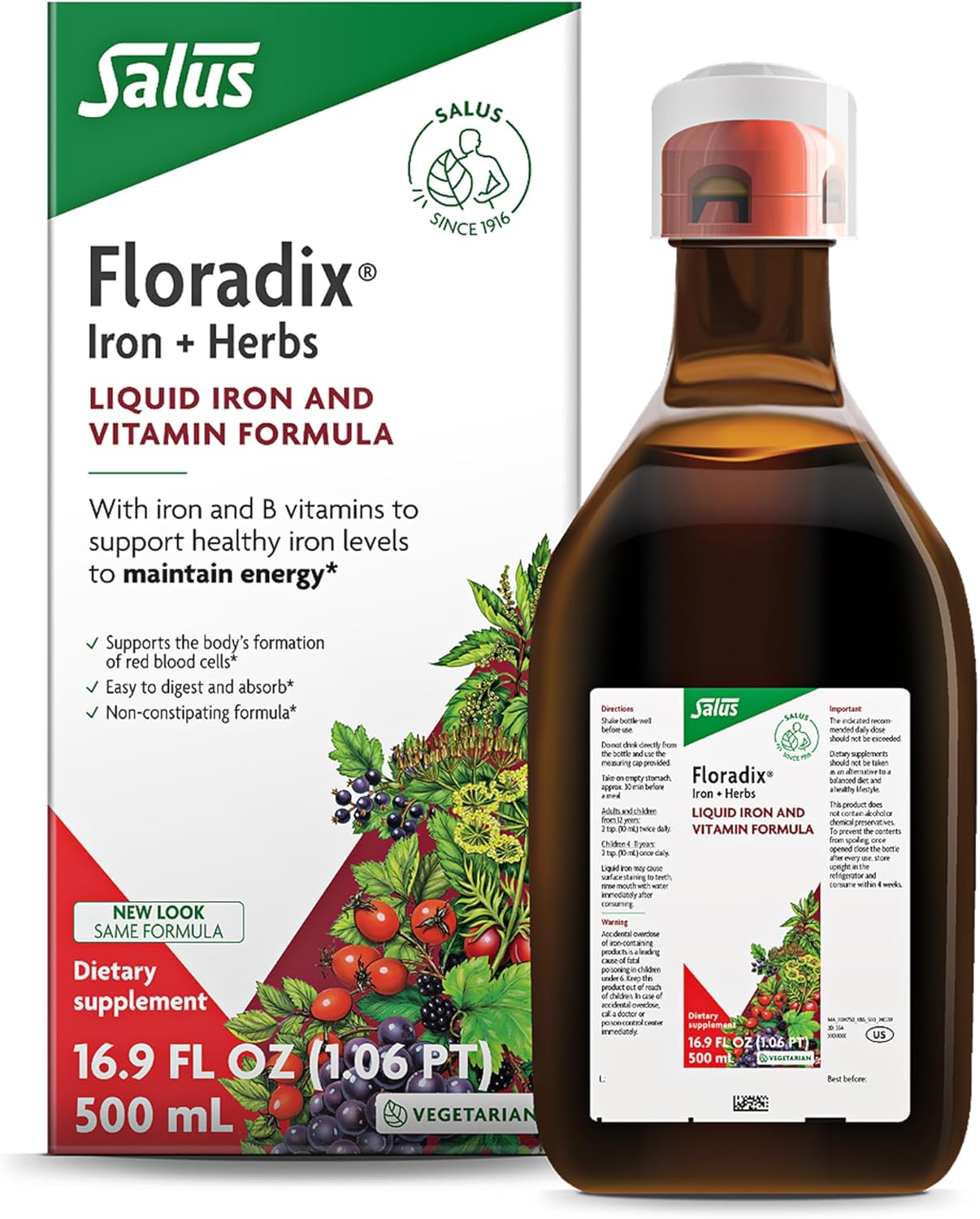
Floradix Liquid Iron + Herbs
Floradix- Liquid herbal iron formula (10mg ferrous gluconate per dose)
- Easy, fast absorption — no pill to dissolve
- Gentle on stomach with herbal digestive support
- Includes vitamin C and B vitamins (B1, B2, B6, B12)
- Free from artificial preservatives and colorings
- Over 60 years of use in Europe
Why we recommend it: Floradix has been a staple in European pharmacies for over six decades, and for good reason. The liquid format eliminates the dissolution step that causes many tablet-related stomach issues. Its herbal base — including fennel, carrot, nettle, and spinach extracts — provides gentle digestive support alongside the iron. A 2004 study in the Journal of Nurse-Midwifery found that Floradix raised hemoglobin in pregnant women as effectively as prescription iron, with better compliance due to fewer side effects. The lower per-dose iron (10mg vs. 25-65mg in tablets) is actually a feature, not a bug: it avoids triggering the hepcidin response, leading to better cumulative absorption. Best for women who dislike pills, have sensitive stomachs, or need a moderate iron boost rather than aggressive repletion.
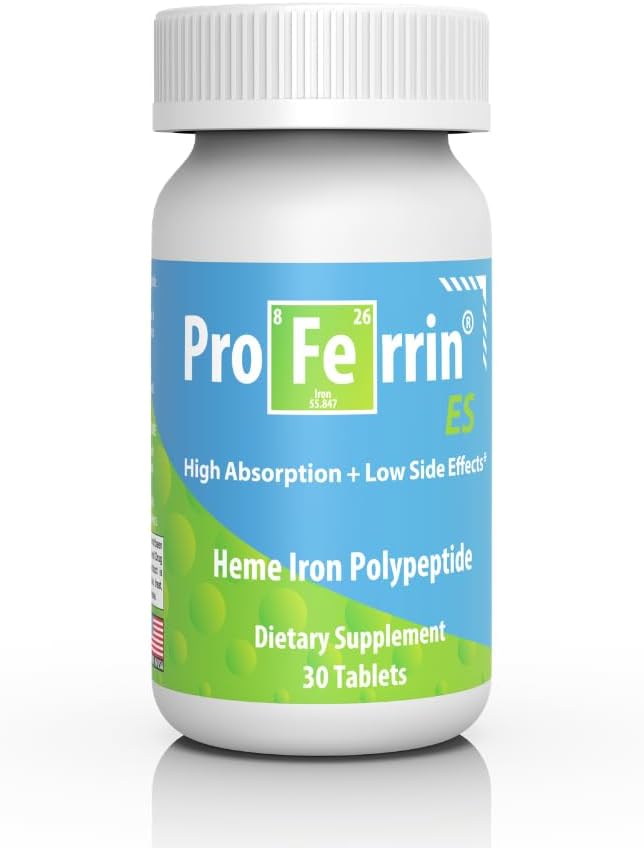
Proferrin ES Heme Iron Polypeptide
Proferrin- Heme iron polypeptide — highest absorption form
- 12mg heme iron per tablet
- Absorbed via separate heme transporter (not blocked by food)
- Easy on digestive system — no metallic taste
- Small, easy-to-swallow tablets
- 30 tablets per bottle
Why we recommend it: Proferrin ES uses heme iron polypeptide (HIP), derived from bovine hemoglobin. This matters because heme iron is absorbed through an entirely different intestinal pathway (the HCP1 transporter) than non-heme iron. It isn't inhibited by phytates, polyphenols, calcium, or fiber — the common dietary factors that block non-heme iron absorption by up to 90%. A clinical study published in the Journal of the American Dietetic Association found HIP absorption was 23 times greater than ferrous fumarate. Proferrin is the choice for women with severe iron deficiency who need rapid repletion, those who eat high-fiber or plant-based diets (which contain many iron absorption inhibitors), or women who have failed other iron supplements due to GI intolerance. The 12mg dose is lower than typical supplements because so much more of it actually gets absorbed.
Tips for Better Iron Absorption
How you take iron matters as much as which iron you choose. These evidence-based strategies can dramatically improve absorption:
Pair with Vitamin C
Vitamin C (ascorbic acid) converts non-heme iron into a more absorbable form and can increase absorption by 2-6x. A 2020 meta-analysis in the European Journal of Clinical Nutrition confirmed that as little as 25-100mg of vitamin C taken with iron significantly boosted absorption. Practical options: take your iron with a small glass of orange juice, a handful of strawberries, or a vitamin C supplement. Garden of Life Vitamin Code Healthy Blood already includes whole-food vitamin C from organic oranges.
Avoid Calcium, Coffee, and Tea at Iron Time
These are the three biggest iron absorption blockers:
- Calcium — inhibits both heme and non-heme iron absorption. A 1991 study in the American Journal of Clinical Nutrition by Hallberg et al. found that 300mg of calcium (one glass of milk) reduced iron absorption by 50-60%. Separate iron and calcium supplements by at least 2 hours.
- Coffee and tea — tannins and polyphenols bind to non-heme iron in the gut. One cup of tea can reduce iron absorption by 75-80%, and coffee by 40-60%. Wait at least 1 hour after taking iron before drinking coffee or tea.
- Phytates — found in whole grains, beans, and nuts. If you eat a high-fiber breakfast, take your iron at a different meal or on an empty stomach if tolerated.
Try Every-Other-Day Dosing
Based on the Moretti et al. research mentioned above, consider taking your iron supplement every other day rather than daily. This counter-intuitive approach allows hepcidin levels to reset, resulting in better net absorption. This strategy is especially useful with higher-dose supplements (25mg+ elemental iron).
Take on an Empty Stomach (If You Can)
Iron is best absorbed on an empty stomach, 1 hour before or 2 hours after meals. However, if this causes nausea, take it with a small amount of food — just avoid the calcium, coffee, and high-fiber foods listed above. Whole-food iron formulas like Garden of Life Vitamin Code Healthy Blood are specifically designed to be taken with or without food.
Side Effects & Solutions
GI side effects are the number one reason women stop taking iron supplements prematurely. Here's how to manage the most common issues:
- Constipation: The most frequent complaint, affecting 15-30% of users. Switch to iron bisglycinate, heme iron, or liquid iron, all of which cause significantly less constipation. Increase water and fiber intake (but separate fiber from iron dosing). Magnesium citrate (200-400mg at bedtime) can help counterbalance iron-related constipation.
- Nausea: Usually caused by taking iron on an empty stomach with high-dose ferrous sulfate. Take with a small snack, switch to a lower dose, or try a whole-food or liquid formula. The Garden of Life Vitamin Code Healthy Blood clinical trial reported zero nausea in participants.
- Stomach pain/cramping: Reduce your dose and build up gradually. Start with half the recommended dose for the first week. Liquid formulas like Floradix are gentler because they deliver iron in smaller, more dilute amounts.
- Dark or black stools: This is normal and harmless. Unabsorbed iron oxidizes in the gut and darkens stool. It's not a sign of internal bleeding (though if stools are tarry and you have other symptoms, consult your doctor).
- Metallic taste: Common with ferrous sulfate and some liquid iron supplements. Heme iron polypeptide (Proferrin) and chelated iron (bisglycinate) rarely cause this. Rinsing your mouth or chewing sugar-free gum after dosing can help.
Important safety note: Do not supplement iron without testing. Excess iron is stored in organs and can cause oxidative damage. Women with hemochromatosis (hereditary iron overload) should never take iron supplements. Always get a ferritin test before starting supplementation, and retest every 3-6 months to monitor progress.
Our Verdict
For most women, start with Garden of Life Vitamin Code Healthy Blood. It's the best all-around iron supplement: clinically validated, zero reported GI side effects, and it includes the B12, folate, and vitamin C co-factors that support complete blood-building. Take it daily or every other day with vitamin C-rich food.
If you dislike pills or have a sensitive stomach, choose Floradix Liquid Iron. The lower per-dose iron and herbal base make it the most tolerable option. It's especially popular with pregnant women and teenagers. You'll need to take it consistently for 2-3 months to see full ferritin repletion.
If you have severe iron deficiency or eat a plant-heavy diet, go with Proferrin ES. Heme iron polypeptide bypasses every major absorption inhibitor — phytates, tannins, calcium — and absorbs at rates 10-23x higher than standard iron forms. It's the fastest path to iron repletion when you need results.
Whichever supplement you choose, get your ferritin tested before starting. Aim for ferritin above 30-50 ng/mL (many functional medicine practitioners target 50-100 ng/mL for optimal energy). Retest after 3 months, and continue supplementing until your stores are fully replenished. Iron deficiency is completely fixable — you just need the right form, the right dose, and a little patience.
Quick Comparison
| Product | Key Feature | Best For |
|---|---|---|
| Garden of Life Vitamin Code Healthy Blood | Gentle whole-food iron bisglycinate | Top Pick |
| Floradix Liquid Iron + Herbs | Liquid herbal iron formula (10mg ferrous glucon... | Over 60 years of use in Europe |
| Proferrin ES Heme Iron Polypeptide | Heme iron polypeptide — highest absorption form | 30 tablets per bottle |
Bottom Line: Which Should You Buy?
For most people: the Garden of Life Vitamin Code Healthy Blood. Gentle whole-food iron bisglycinate.
On a budget: the Floradix Liquid Iron + Herbs. Liquid herbal iron formula (10mg ferrous gluconate per dose).
Premium pick: the Proferrin ES Heme Iron Polypeptide. Heme iron polypeptide — highest absorption form.
Ready to buy?
Jump straight to our top picks on Amazon.
Frequently Asked Questions
How much iron do women need per day?
Women ages 19-50 need 18mg of iron daily due to menstrual losses. Pregnant women need 27mg daily. After menopause, the requirement drops to 8mg daily, the same as men. Women with heavy periods, athletes, and frequent blood donors may need more. A blood test measuring serum ferritin is the best way to determine your individual needs.
What is the best form of iron supplement for women?
It depends on your tolerance and deficiency level. Iron bisglycinate and whole-food iron (like Garden of Life Vitamin Code Healthy Blood) cause the fewest side effects. Heme iron polypeptide (like Proferrin) has the highest absorption rate at 15-35%. Ferrous sulfate is the cheapest and most studied but causes the most GI side effects. Liquid iron (like Floradix) works well for women who can't swallow pills.
Can I take iron supplements with coffee or tea?
No — coffee, tea, and calcium significantly reduce iron absorption. Tannins in coffee and tea can reduce non-heme iron absorption by 50-90%. Take iron supplements at least 1-2 hours away from coffee, tea, dairy, and calcium supplements. Instead, take iron with vitamin C (orange juice, strawberries, bell peppers) to boost absorption by up to 6x.
How long does it take for iron supplements to work?
Most women notice improved energy within 2-4 weeks of consistent supplementation. However, it takes 3-6 months to fully replenish iron stores (ferritin levels). A 2020 study in Blood Advances found that women with iron deficiency anemia saw hemoglobin improvements within 2 weeks, but ferritin normalization required 12+ weeks. Continue supplementing until your doctor confirms adequate ferritin levels (ideally above 30-50 ng/mL).
What are the side effects of iron supplements?
Common side effects include constipation, nausea, stomach cramps, and dark stools. These are most common with ferrous sulfate and ferrous fumarate. To minimize side effects, choose gentle forms like iron bisglycinate, whole-food iron, or heme iron polypeptide. Taking iron every other day (rather than daily) has been shown to improve absorption and reduce side effects. Start with a lower dose and increase gradually.
Related Articles


Sources & Research
This article was informed by peer-reviewed research and clinical guidelines. The Supplements Corner Editorial Team reviews published literature to ensure accuracy.
Dosage Reference
The NIH recommends 8 mg/day for adult men and 18 mg/day for premenopausal women. During pregnancy, the recommendation rises to 27 mg/day. Therapeutic doses for iron-deficiency anemia are typically 100–200 mg of elemental iron daily, as directed by a physician.
Key Studies Referenced:
- Camaschella C. (2015). "Iron-deficiency anemia." New England Journal of Medicine, 372(19), 1832–1843.
- Low MSY, Speedy J, Styles CE, et al. (2016). "Daily iron supplementation for improving anaemia, iron status and health in menstruating women." Cochrane Database of Systematic Reviews, (4), CD009747.
- Stoffel NU, Cercamondi CI, Brittenham G, et al. (2017). "Iron absorption from oral iron supplements given on consecutive versus alternate days and as single morning doses versus twice-daily split doses." Blood, 130(17), 1876–1885.
Medical Disclaimer: This content is for informational purposes only and does not constitute medical advice, diagnosis, or treatment. Always consult a qualified healthcare provider before starting, stopping, or changing any supplement regimen. Individual results may vary.