 Supplements
Complete guide to magnesium for sleep: which forms work best (glycinate, threonate, citrate), proper dosages, timing, and evidence-based recommendations.
Why Magnesium Matters for Sleep
Magnesium is involved in over 300 enzymatic reactions, and 50-70% of adults don't get enough from diet alone. Soil depletion, processed food consumption, and chronic stress have made deficiency increasingly common. Low magnesium is strongly linked to insomnia, poor sleep efficiency, and nighttime awakenings. Magnesium stabilizes neurotransmitters, reduces cortisol, and activates the parasympathetic nervous system -- without adequate levels, your body struggles to shift from the alert sympathetic state into sleep mode. A simple blood test can check serum magnesium, though serum levels only reflect severe deficiency; red blood cell (RBC) magnesium is a more sensitive marker.
How Magnesium Affects Sleep Quality
Magnesium supports sleep through several complementary mechanisms: it enhances GABA signaling (the brain's primary inhibitory neurotransmitter, calming neural activity), acts as a cofactor for melatonin production from serotonin, suppresses cortisol by inhibiting ACTH release from the pituitary gland, activates parasympathetic pathways needed for rest and recovery, and promotes muscle relaxation that prevents restless legs and sleep fragmentation. These multiple pathways explain why magnesium often helps when single-mechanism sleep aids like melatonin alone are insufficient.
Best Magnesium Forms for Sleep
Not all magnesium supplements are equally effective for sleep. The form you choose significantly impacts bioavailability and secondary effects. Here's what the research shows:
| Form | Bioavailability | Sleep Benefit | Typical Dose | Best For |
|---|---|---|---|---|
| Glycinate | High (chelated) | Excellent | 200-300mg | Sleep + relaxation |
| Threonate | High (BBB crossing) | Excellent | 2000mg (Magtein) | Sleep + cognition |
| Citrate | High | Good | 200-400mg | Sleep (if loose stools ok) |
| Malate | Good | Moderate | 1200-2400mg | Muscle recovery |
| Oxide | Low (5-15%) | Minimal | 400-500mg | Avoid — poor absorption |
Related: Best Magnesium Glycinate for Sleep (2026): Top 3 Compared
Magnesium Glycinate for Sleep
Magnesium glycinate is the best overall form for sleep. Glycine itself promotes sleep by lowering core body temperature and increasing serotonin, creating a synergistic effect. This chelated form absorbs approximately 24% better than oxide and is the gentlest on digestion with no laxative properties. A 2012 randomized trial in elderly insomniacs found 500mg of magnesium (as glycinate/oxide blend) improved sleep onset, duration, and early-morning waking versus placebo over 8 weeks. Take 200-300mg elemental magnesium from glycinate 30-60 minutes before bed.
Magnesium Threonate for Sleep
Magnesium threonate (Magtein) is the only form proven to cross the blood-brain barrier effectively, making it ideal for sleep problems rooted in low brain magnesium. A 2016 human trial found it improved overall sleep quality scores and reduced wakefulness in older adults within 6 weeks. Adequate brain magnesium is essential for deep sleep and memory consolidation. Take 2,000mg daily (provides ~144mg elemental magnesium) in divided doses -- some users split into morning and evening doses to maintain steady brain levels. It is substantially more expensive than glycinate, which offers similar sleep benefits at lower cost.
Magnesium Citrate for Sleep
Magnesium citrate is affordable, widely available, and well-absorbed, making it a reasonable budget option for those new to magnesium supplementation. However, it has a mild laxative effect that can disrupt sleep with nighttime bathroom trips. Take 200-400mg elemental magnesium; start at 200mg to assess tolerability. Switch to glycinate if digestive effects interfere with sleep quality.
Magnesium Oxide (Avoid for Sleep)
Magnesium oxide has only 5-15% bioavailability and primarily acts as a laxative rather than a systemic magnesium source. Despite being cheap per pill, you pay more per unit of absorbed magnesium and are more likely to experience digestive side effects. Avoid oxide for sleep -- upgrade to glycinate or citrate.
Dosage Recommendations
Start with 200mg elemental magnesium 30-60 minutes before bed. If no improvement after 2-4 weeks, increase to 300mg. The therapeutic range used in most sleep studies is 300-400mg daily; the NIH upper limit is 350mg from supplements alone (dietary magnesium does not count toward this limit). By form: glycinate 200-300mg elemental, threonate 2,000mg total (provides ~144mg elemental), citrate 200-400mg elemental. Do not exceed 350mg of supplemental magnesium daily without medical supervision.
When to Take Magnesium
Take magnesium 30-60 minutes before your target sleep time for optimal absorption and effect. Consistency matters more than exactness -- taking it at the same time nightly helps establish a routine that signals sleep preparation to your body. Can be taken with or without food, though some people find taking with a small snack reduces any mild stomach sensitivity. Avoid taking with calcium, iron, or zinc supplements which compete for absorption through the same intestinal transporters (separate by 2+ hours).
Who Benefits Most
Magnesium works best for people with low baseline magnesium status (risk factors: chronic stress, high sugar intake, heavy exercise, PPIs, diuretics), those with chronic stress and anxiety (stress depletes magnesium, creating a vicious cycle), restless leg syndrome sufferers, and people with nighttime muscle tension or cramping. Shift workers and frequent travelers often benefit due to disrupted circadian rhythms and elevated cortisol. People with normal magnesium levels or primarily behavioral sleep problems (poor sleep hygiene) may see minimal benefit -- address sleep habits first before adding supplements.
Side Effects & Safety
At 200-350mg daily, magnesium is one of the safest supplements available. Citrate may cause loose stools in 5-10% of users (glycinate virtually never does). Separate from medications by 2+ hours, particularly bisphosphonates, antibiotics, and thyroid medications. People with kidney disease should only supplement under medical supervision, as impaired kidneys cannot excrete excess magnesium efficiently. Safe during pregnancy at recommended doses (RDA 320-360mg), but consult your OB-GYN first. If you experience drowsiness during the day, reduce the dose or shift entirely to an evening schedule.
Our Top Picks
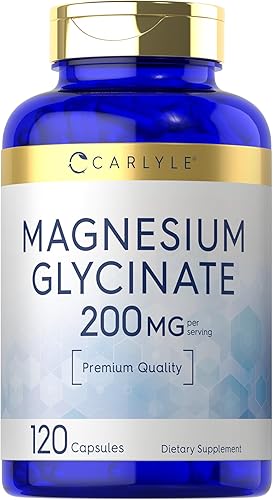
Carlyle Magnesium Glycinate 200mg
Carlyle
- 200mg magnesium glycinate per capsule
- Glycinate form — dual sleep benefits from magnesium + glycine
- Optimal for anxiety-related insomnia
- Non-GMO and gluten-free
- No digestive side effects — excellent tolerability

Jarrow Formulas MagMind
Jarrow Formulas
- Magnesium L-threonate (Magtein®)
- 60 veggie capsules
- Brain health and memory support
- Form best shown to raise brain magnesium
- Science-first supplement brand
- Easy capsule dosing

Solgar Magnesium Citrate
Solgar
- Highly bioavailable citrate form
- 120 tablets
- Non-GMO, vegan, gluten- and dairy-free
- Supports nerve and muscle function
- Legacy brand est. 1947
- Consistent batch quality
Bottom Line: Which Should You Buy?
For most people: the Carlyle Magnesium Glycinate 200mg. 200mg magnesium glycinate per capsule.
On a budget: the Jarrow Formulas MagMind. 2000mg per serving (144mg elemental magnesium).
Premium pick: the Solgar Magnesium Citrate. 200mg elemental magnesium per tablet.
Ready to buy?
Jump straight to our top picks on Amazon.
Frequently Asked Questions
What is the best magnesium form for sleep?
Magnesium glycinate and magnesium threonate are the top forms for sleep. Glycinate provides calming effects from glycine plus magnesium. Threonate crosses the blood-brain barrier, making it ideal for sleep quality and cognitive function. Citrate works but may have mild laxative effects.
How much magnesium should I take for sleep?
Most sleep studies use 200-400mg of elemental magnesium daily, taken 30-60 minutes before bed. Start with 200mg and increase gradually if needed. The upper limit for supplemental magnesium is 350mg daily per NIH guidelines. Consult a healthcare provider for your individual needs.
When should I take magnesium for better sleep?
Take magnesium 30-60 minutes before bed for optimal results. This timing allows absorption before you attempt sleep. Some people prefer earlier doses if they experience digestive effects. Consistency matters more than exact timing — take it at the same time each night.
Does magnesium really help with sleep?
Yes, the evidence supports magnesium for sleep. Magnesium activates the parasympathetic nervous system, reduces cortisol, and regulates melatonin. Multiple clinical trials show improvements in sleep latency, total sleep time, and subjective sleep quality, particularly in people with low baseline magnesium status.
Are there side effects to magnesium for sleep?
Glycinate and threonate are very well-tolerated with minimal side effects. Citrate may cause loose stools in some people. High doses can cause digestive upset. Most people tolerate magnesium well when starting with lower doses (200mg) and increasing gradually.
Related Articles


Sources & Research
This article was informed by peer-reviewed research and clinical guidelines. The Supplements Corner Editorial Team reviews published literature to ensure accuracy.
Dosage Reference
The NIH recommends 310–320 mg/day of magnesium for adult women and 400–420 mg/day for adult men. For sleep, clinical trials have typically used 225–500 mg of elemental magnesium taken 1–2 hours before bedtime.
Key Studies Referenced:
- Abbasi B, Kimiagar M, Sadeghniiat K, et al. (2012). "The effect of magnesium supplementation on primary insomnia in elderly: A double-blind placebo-controlled clinical trial." Journal of Research in Medical Sciences, 17(12), 1161–1169.
- Held K, Antonijevic IA, Künzel H, et al. (2002). "Oral Mg2+ supplementation reverses age-related neuroendocrine and sleep EEG changes in humans." Pharmacopsychiatry, 35(4), 135–143.
- Zhang Y, Chen C, Lu L, et al. (2022). "Association of magnesium intake with sleep duration and sleep quality: findings from the CARDIA study." Sleep, 45(4), zsab276.
- Cao Y, Zhen S, Taylor AW, et al. (2018). "Magnesium intake and sleep disorder symptoms: Findings from the Jiangsu Nutrition Study." Nutrients, 10(10), 1354.
Medical Disclaimer: This content is for informational purposes only and does not constitute medical advice, diagnosis, or treatment. Always consult a qualified healthcare provider before starting, stopping, or changing any supplement regimen. Individual results may vary.