 Supplements
Best nootropic pouches ranked: buccal absorption, how they work, common ingredients, and top products reviewed for cognitive focus and mental performance.
What Are Nootropic Pouches?
Nootropic pouches are small, discreet pouches placed between the gum and cheek that deliver cognitive-enhancing compounds through buccal absorption -- the same delivery method used by nicotine pouches. They typically contain a blend of caffeine (10-40mg), amino acids like L-theanine, adaptogens, and sometimes nicotine. Effects are felt within 10-20 minutes, making them practical for studying, work presentations, or meetings. The format works anywhere discreetly and requires no water or preparation.
How Buccal Absorption Works
Buccal absorption delivers compounds through the mucous membranes lining your cheeks and gums, bypassing the digestive system entirely. The buccal mucosa has extensive blood vessel networks close to the surface, allowing rapid absorption directly into the bloodstream. This means faster onset (10-20 minutes vs 30-45 for pills), no first-pass liver metabolism reducing potency, and no stomach acid degradation of sensitive compounds.
The practical difference is meaningful: a pouch delivering 6mg of nicotine buccally may produce stronger effects than a 10mg oral dose. Caffeine is also notably more bioavailable through buccal delivery. This efficiency is why nootropic pouches can use lower doses of active ingredients while matching or exceeding the effects of higher-dose pills.
Common Ingredients Explained
Caffeine & L-Theanine
Caffeine (20-40mg) blocks adenosine receptors to increase wakefulness, with buccal effects felt in 10-15 minutes. L-theanine (50-200mg) promotes calm focus by smoothing caffeine's jitteriness. This is the most evidence-backed nootropic pairing -- a 2016 study in Nutritional Neuroscience showed the combination improved sustained attention and reduced fatigue better than caffeine alone. Look for a 2:1 or 3:1 theanine-to-caffeine ratio.
Alpha-GPC for Memory
Alpha-GPC (l-alpha glyceryl-3-phosphoryl-choline) boosts acetylcholine, a neurotransmitter critical for memory formation, learning, and attention. Research shows 300-600mg improves memory encoding and retrieval. A 2017 study in the Journal of Alzheimer's Disease found older adults supplementing with alpha-GPC showed improved verbal memory. Pouches typically include 200-400mg, though buccal absorption of alpha-GPC is less established than for caffeine and L-theanine.
Nicotine & Nicotine-Free Options
Some premium pouches contain 2-6mg nicotine, which improves attention, working memory, and mood at low doses (1-2mg). Research consistently shows low-dose nicotine enhances cognitive performance in healthy adults. However, it carries mild addiction potential, tolerance risk with daily use, and may not suit people with cardiovascular concerns. Nicotine-free pouches relying on caffeine, L-theanine, and adaptogens deliver about 80% of the cognitive benefit without dependency concerns -- making them preferable for most long-term users.
Adaptogens & Herbal Ingredients
Common additions include rhodiola rosea (50-200mg, reduces fatigue by ~9 points on a 100-point scale per a 2016 meta-analysis), bacopa monnieri (150-300mg, improves memory consolidation and recall speed), L-tyrosine (500-2000mg, boosts dopamine and norepinephrine for focus under stress), and B vitamins (B6, B12, folate) for neurotransmitter synthesis. Quality pouches include these at evidence-based doses -- always check the supplement facts label for actual amounts rather than accepting token doses.
Top Nootropic Pouches Ranked

NZE Caffeine Nootropic Pouches
NZE- 50mg caffeine + alpha-GPC + L-theanine
- Zero nicotine, clean stimulation
- L-tyrosine for dopamine support
- Effects in 10-15 minutes

Fully Loaded Alpha Fuel Nootropic Pouches
Fully Loaded- Caffeine + L-theanine + B vitamins
- Nicotine-free nootropic blend
- Smooth, sustained focus effect
- Multiple flavor options
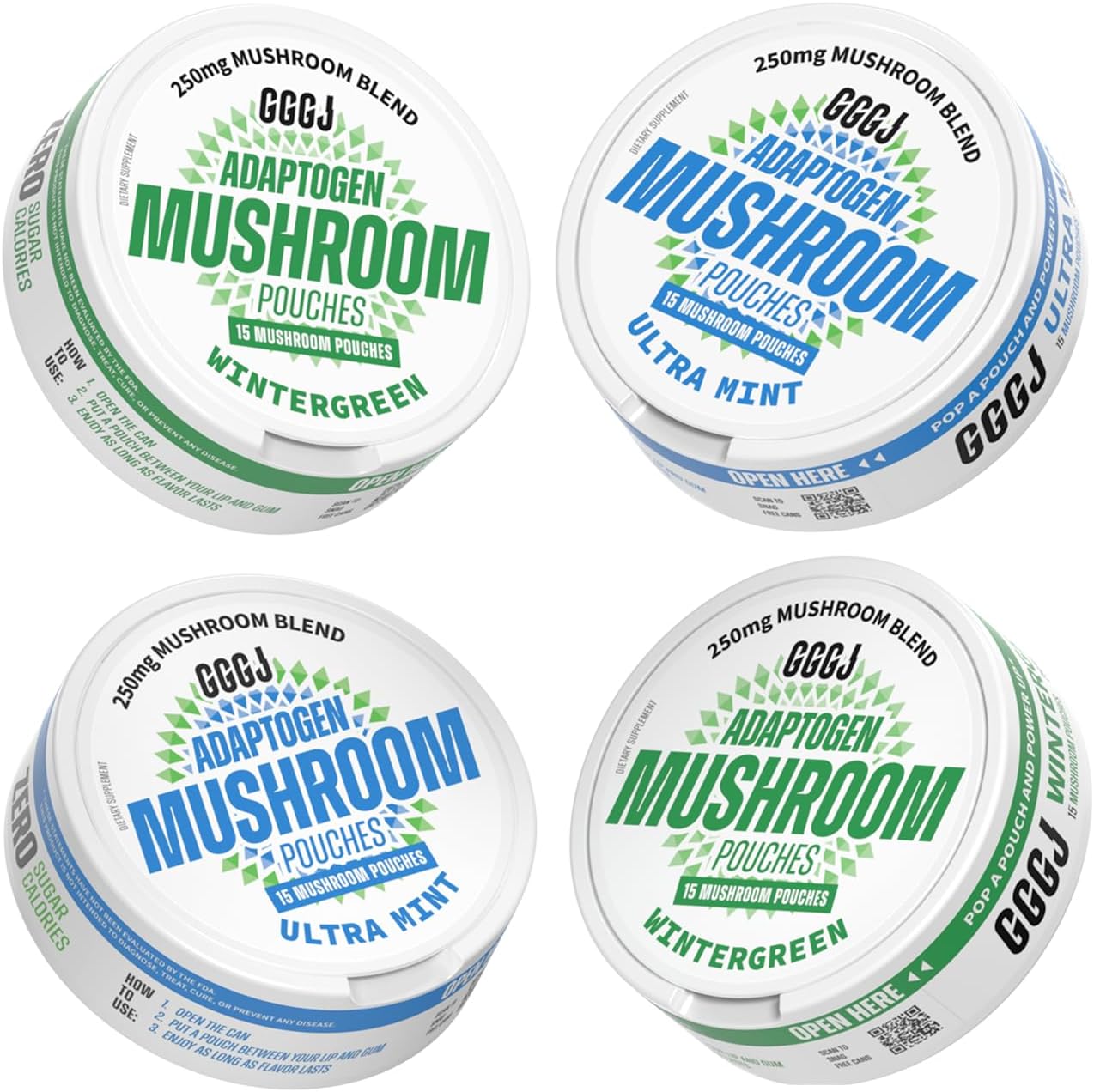
Adaptogen Mushroom Nootropic Pouches
Adaptogen- 250mg mushroom blend + 165mg energy blend
- Lion's mane + cordyceps adaptogens
- Nicotine-free & caffeine-free
- Great for sustained focus without jitters

NEURIVA Ultra Nootropic Capsules (Pouch Alternative)
NEURIVA- Clinically tested nootropic formula
- Mental alertness + memory + focus
- Decaffeinated capsule format
- Best budget-friendly option
Who Should Use Them & Safety
Best suited for: Knowledge workers, students, people with demanding cognitive jobs, and anyone seeking rapid focus enhancement. The fast onset (10-20 minutes) makes them ideal for pre-work or pre-study use, and the discreet format works anywhere.
Not recommended for: People sensitive to caffeine, those with cardiovascular concerns (especially nicotine-containing pouches), pregnant women, and anyone taking medications that interact with stimulants or adaptogens.
Best practices: Use 2-3 times weekly rather than daily to prevent tolerance buildup. Rotate pouch placement to minimize gum irritation. Start with one pouch to assess tolerance. Buy from established brands with transparent labeling and third-party testing -- quality varies significantly between brands, and some contain understated ingredient amounts.
Our Verdict
Nootropic pouches are a legitimate cognitive tool with real advantages over pills -- faster onset via buccal absorption and higher bioavailability for key compounds. Look for products with caffeine + L-theanine in proper ratios, alpha-GPC, and adaptogens at meaningful doses. Use 2-3 times weekly to prevent tolerance, and prefer nicotine-free options for long-term use unless you specifically need the stronger cognitive edge nicotine provides.
Quick Comparison
| Product | Key Feature | Best For |
|---|---|---|
| NZE Caffeine Nootropic Pouches | 50mg caffeine + alpha-GPC + L-theanine | Top Pick |
| Fully Loaded | Caffeine + L-theanine + B vitamins | Multiple flavor options |
| Adaptogen | 250mg mushroom blend + 165mg energy blend | |
| NEURIVA | Clinically tested nootropic formula | Best budget-friendly option |
Bottom Line: Which Should You Buy?
For most people: the NZE Caffeine Nootropic Pouches. 50mg caffeine + alpha-GPC + L-theanine.
On a budget: the Fully Loaded Alpha Fuel Nootropic Pouches. Caffeine + L-theanine + B vitamins.
Premium pick: the NEURIVA Ultra Nootropic Capsules (Pouch Alternative). Clinically tested nootropic formula.
Ready to buy?
Jump straight to our top picks on Amazon.
Frequently Asked Questions
How do nootropic pouches work?
Nootropic pouches work through buccal absorption, where active ingredients are absorbed through the mucous membranes inside your mouth rather than passing through the digestive system. This allows for faster onset (10-20 minutes typically) and potentially higher bioavailability compared to swallowing pills. Users place the pouch between their gum and cheek.
What are the main ingredients in nootropic pouches?
Common nootropic pouch ingredients include caffeine for alertness, L-theanine for calm focus, alpha-GPC for memory and cognition, nicotine for mood and focus, B vitamins for energy and methylation, and adaptogens like rhodiola. High-quality pouches combine these for synergistic effects. Avoid products with excessive stimulants or unclear ingredient sourcing.
Are nootropic pouches better than pills?
Nootropic pouches offer faster absorption (10-20 minutes vs 30-45 minutes for pills) through buccal delivery, avoiding hepatic first-pass metabolism. However, pills may have better bioavailability for certain compounds. The choice depends on your needs — pouches are better for rapid onset, while pills may be better for specific ingredients like SAM-e or CDP-choline.
Do nootropic pouches contain nicotine?
Some high-end nootropic pouches contain nicotine (typically 2-6mg per pouch) for its cognitive and mood benefits. Nicotine research shows modest improvements in attention and memory. However, many quality nootropic pouches are nicotine-free and still deliver cognitive benefits through caffeine, L-theanine, and other ingredients. Check labels if nicotine status matters to you.
Are nootropic pouches safe?
Nootropic pouches from reputable brands are generally safe at recommended doses. Risks depend on ingredients — high caffeine doses can cause jitteriness and sleep disruption, nicotine carries addiction potential, and some adaptogens may interact with medications. Start with one pouch to assess tolerance, avoid using daily if they contain stimulants, and consult a doctor if on medications.
Related Articles


Sources & Research
This article was informed by peer-reviewed research and clinical guidelines. The Supplements Corner Editorial Team reviews published literature to ensure accuracy.
Dosage Reference
Dosages vary by compound: L-theanine 100–400 mg/day, caffeine 50–200 mg, bacopa monnieri 300–600 mg/day, lion’s mane 500–3,000 mg/day. Stack combinations should start with lower individual doses.
Key Studies Referenced:
- Suliman NA, Mat Taib CN, Mohd Moklas MA, et al. (2016). "Establishing natural nootropics: Recent molecular enhancement influenced by natural nootropic." Evidence-Based Complementary and Alternative Medicine, 2016, 4391375.
- Pase MP, Kean J, Sarris J, et al. (2012). "The cognitive-enhancing effects of Bacopa monnieri: a systematic review of randomized, controlled human clinical trials." Journal of Alternative and Complementary Medicine, 18(7), 647–652.
- Owen GN, Parnell H, De Bruin EA, Rycroft JA. (2008). "The combined effects of L-theanine and caffeine on cognitive performance and mood." Nutritional Neuroscience, 11(4), 193–198.
Medical Disclaimer: This content is for informational purposes only and does not constitute medical advice, diagnosis, or treatment. Always consult a qualified healthcare provider before starting, stopping, or changing any supplement regimen. Individual results may vary.